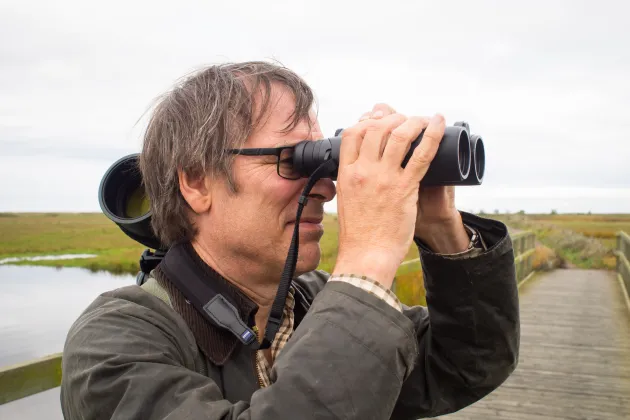
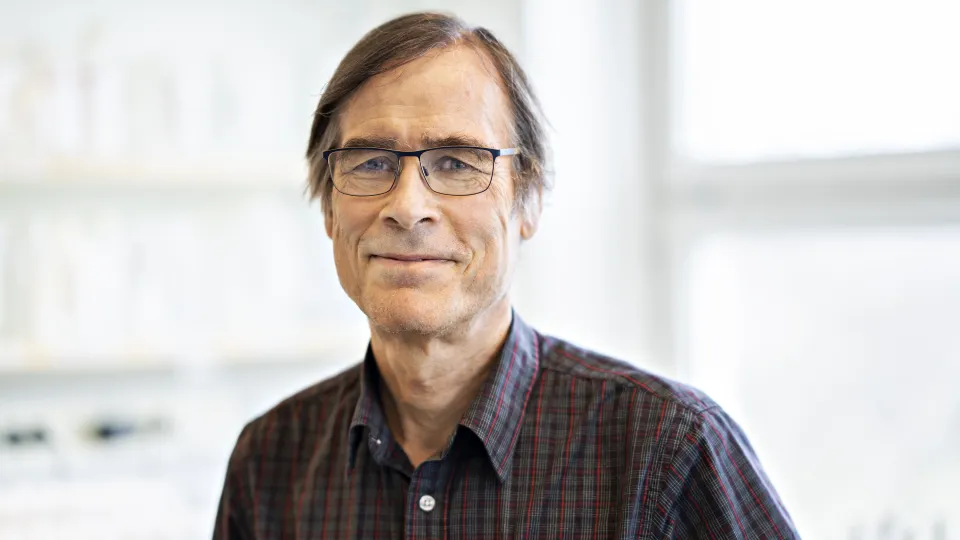
The motivation for the Marsh Awards for Ecology highlights Henrik Smith’s profound influence on research, policy, and education, along with his efforts to make science accessible to decision-makers at both national and international levels. The British Ecological Society, founded in 1913, is one of the world’s most respected scientific societies in the field of ecology.
“When I look at the list of previous recipients, I feel humbled—many of them have inspired my research over the years. It feels like a reward for the long-term efforts I’ve made to develop ecology and bring it into society,” says Henrik Smith.
Among past recipients are Ilkka Hanski, who developed theories in population ecology and received the Crafoord Prize in 2011, and Teja Tscharntke, one of the world’s leading and most cited agroecologists.
Individual studies aren’t enough
For over four decades, Henrik Smith has researched ecology, biodiversity, and climate change. He has launched educational programs, founded research environments, and contributed to the development of ecological science through his publications. Yet he remains self-critical, arguing that academia falls short in making knowledge about climate and biodiversity accessible to the public and policymakers.
“Researchers need to get better at packaging and communicating their knowledge so it becomes useful to society. It’s not enough to present isolated studies—research must be placed in a broader context and communicated in ways that make it relevant for policy development and practical decisions,” says Henrik Smith.
He also emphasizes that the barrier isn’t necessarily individual researchers’ lack of engagement.
“We rigorously measure the quality and quantity of research, but contributions in teaching and societal impact unfortunately carry little weight in career advancement and competition for research funding. We need to reward and encourage researchers’ engagement with the rest of society,” he says.
Research relevant to politics
Working closer to politics and policy has become an increasingly important part of Henrik Smith’s daily work. He served on Sweden’s Climate Policy Council (2022–2025) and is a member of the Swedish Environmental Protection Agency’s biodiversity advisory board. He notes that society is reacting far too slowly to address both the climate crisis and biodiversity loss—and that research can do more.
“This isn’t about researchers becoming political, but about contributing knowledge that can inform democratic decisions,” says Henrik Smith.
Climate research backlash
While he finds hope in young people’s engagement with environmental issues, Henrik Smith also expresses concern about the future of research. He points to a global trend where scientific independence is being questioned and research funding is at risk.
“We see examples of this in the U.S., where key agencies like NOAA and NASA—responsible for climate observations and analysis—may face major funding cuts. That’s troubling, not only for climate research there, but also for how it affects research agendas in Europe and Sweden. But these issues won’t disappear—in the long run, we must allocate resources to environmental and climate science,” he says.
Ivory towers and social media
So, how should we respond to movements that question science in general and climate science in particular? Henrik Smith argues that research must remain credible and relevant, but also that researchers need time and opportunity to engage with society.
“If we lock ourselves away in ivory towers, societal development will be driven more by social media than by actual knowledge. We need to be out there—in dialogue, in education, in the media.”
The role of research in transition
Some argue that we don’t need more research on the environment and climate—that we already know the causes and solutions. But Henrik Smith sees research as essential and multifaceted.
“Beyond explaining the causes of problems, research is needed to find cost-effective solutions in a society where many interests compete for resources. On top of that, we need social science research to understand how to build public acceptance and design effective policies,” he says.
Our relationship with nature is key
Henrik Smith is also careful to point out that some questions lie beyond the reach of research—such as how society values nature in relation to material welfare.
“Research can help us understand how people think about these issues, but it can’t make the decisions for us. These are democratic choices that society must make,” he says.
He also emphasizes the importance of experiencing and learning from nature, which can foster greater commitment to protecting it.
“It’s partly an emotional issue. To care about nature, you need a relationship with it. That’s why we must ensure nature is close to us—in cities, near schools, in everyday life. And we must make sure that knowledge about nature is included in all education, not just in biology,” says Henrik Smith.